




Ratio or mixing ratio, a practical approach
One of the first problems you encounter on your journey to heavenly coffee at home is how to achieve a correct and repeatable ratio of water to coffee. You may have bought both a grinder and a scale, but how do you do it correctly, easily, and practically?
We recommend that you read a bit about extraction on our blog before reading this post. This will help you understand some of the concepts better, but we strive to make it as simple as possible.
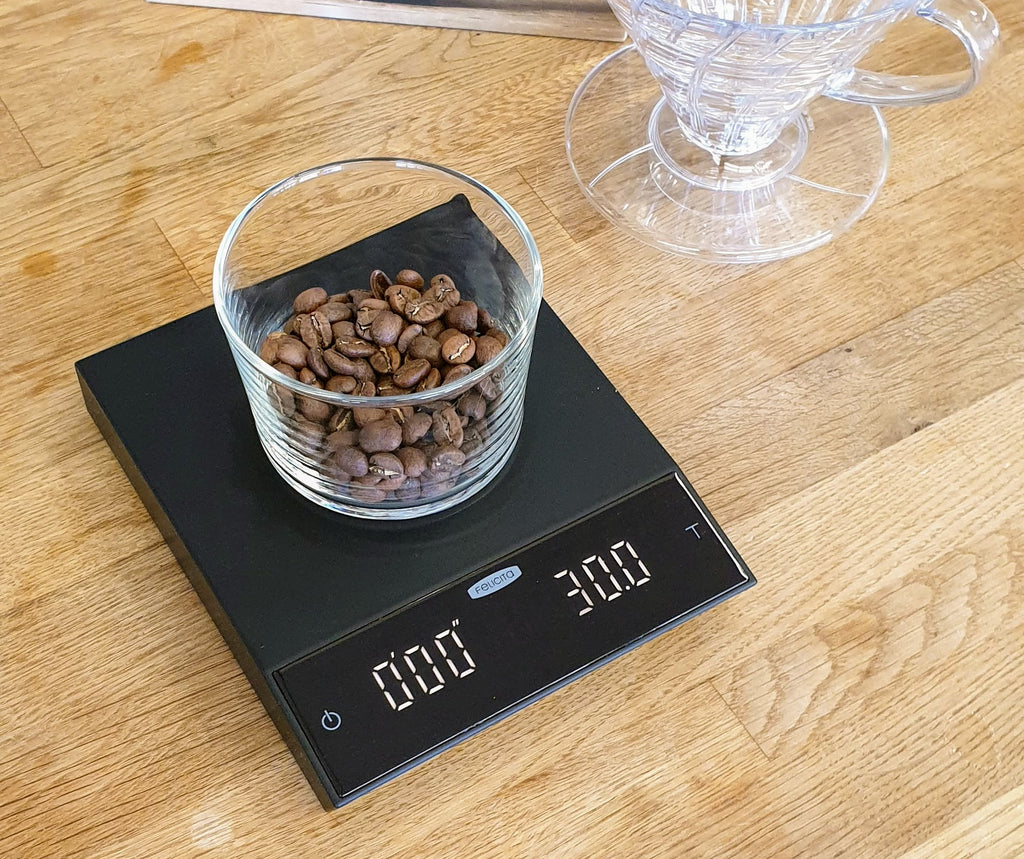
The simplest is often the best, or at least the easiest, so let's start there. The easiest way is to completely disregard the scale during the brewing process itself; most brewers/serving carafes have volume markings. Hario's serving carafes and even Chemex 6 and 8-cup brewers have this (the knob on the side of an 8-cup brewer is for 500ml). This makes it easy to brew according to the recipe of 30g of ground coffee to brew 500ml of coffee. Especially if, like the article's author, you have a grinder with a scale, you can easily and precisely brew a dose of coffee even when half-asleep. Or you can use a simple scale to weigh out 30g of coffee for the grinder the night before. You can easily optimize the brew by adjusting the dosage up or down and adjusting the grinder, as we have discussed earlier on the blog here. The limitations are that you are mostly restricted to brewing, for example, 30g and 500ml at a time, which is not always optimal.
The optimal way to brew is with a brewing scale, but even here there are a few things to consider. You might read recipes online, but what are they weighing and how? The ideal is to have a dedicated brew stand (but few people do). This makes it easy to weigh the actual weight of the coffee you have brewed; always remember to tare the scale before you start pouring water. Some scales, like the ARC from Felicita, have an auto-tare function. But this rarely offers a great advantage except in a coffee shop setting where you brew over and over again, etc. Your ratio is then the ratio between ground coffee and the finished brew, and probably also the most correct value to use as a ratio.
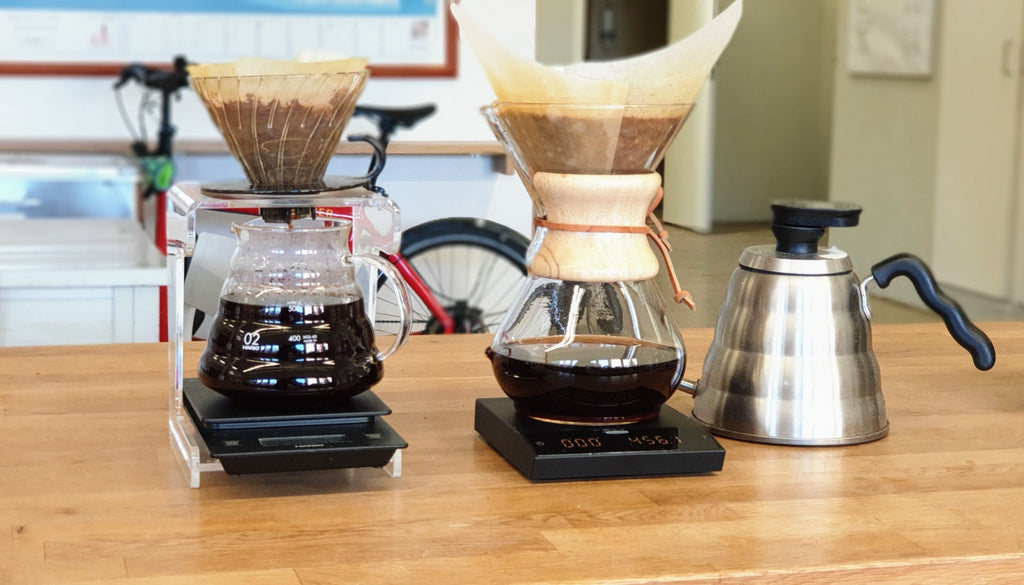 If you have a brew stand, you can brew even more accurately.
If you don't have a brew stand, there are a few more considerations, because then you typically tare (set to zero) the scale before pouring water, and what you are then weighing is how much water you pour over your brewing setup. And a good deal of the water remains in the coffee grounds in the filter, but some of the coffee goes down into the brew. Therefore, your ratio, or in this case, the ratio between ground coffee and the water you pour over the coffee, will be different. A small but important difference.
It is important to emphasize that there is no right or wrong here, but that all three methods above are good enough to get absolutely fantastic and repeatable results at home. On a Chemex and to some extent an Aeropress, for example, it is very impractical to use method two with a brew stand, and when brewing espresso, one is again limited to method one or two. And a seasoned coffee connoisseur can, of course, juggle all methods as needed.
Penned by Rune Åldstedt


Relevante Artikler
-

Matcha, coffee, or both? How to optimize your energy
What is it about us Norwegians and coffee? In Norway, we drink an average of 9-10 kilos of coffee per person per year...
-

Brazil, Coffee, and Sustainability in a New Normal
At KAFFA, we have traveled for over 20 years to find the best farmers and the best beans. Over these years, we have b...


