




A Simple Guide to Better Coffee at Home
Now that you are hopefully well on your way in your coffee journey, you may find that not everything is as simple as it seems: You order a coffee at your favorite coffee shop or from your favorite roastery and fall in love with the taste. Determined to enjoy this coffee every morning, you buy a bag of fresh coffee to take home. Using your favorite brewing method and your reliable Baratza grinder, you follow a recommended recipe. Then, with great anticipation, you take the first sip and are very disappointed – the coffee doesn't taste at all like it did at the coffee shop. In fact, it doesn't taste good at all.
We've all been there, trust us, it's understandably confusing (if that's allowed to say). Let's clear up some of the mystery surrounding why coffee tastes good sometimes, and not so good other times.

"The first and biggest step towards good coffee at home is good coffee!"
There are an incredible number of variables in the brewing process (e.g., Extraction), and it's almost impossible to juggle them all at once - even though we listed five important factors to focus on in a previous post. Let's quickly refresh the three big ones here.
The first and biggest step towards good coffee at home is good coffee! After all, coffee is the main point of all this, so it's important that the coffee you have is of good quality and a coffee you like!

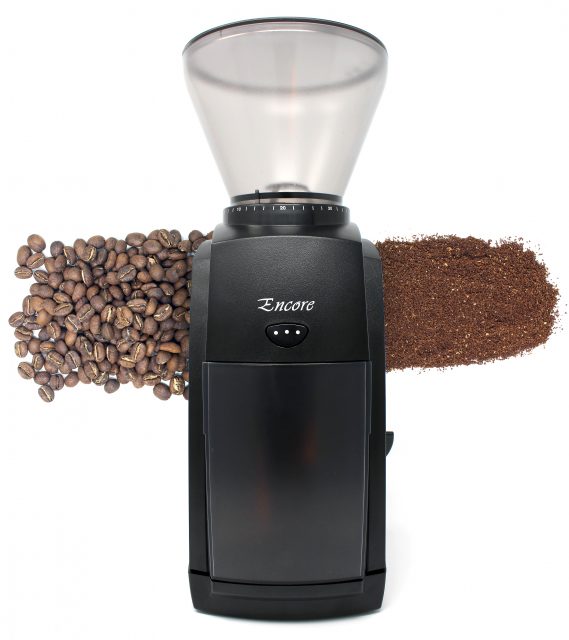
The second big step in getting really good coffee at home is the grinder. Freshly ground coffee always makes better coffee, and a quality grinder gives you freshly ground coffee with repeatability and consistency in the grind. Your grinder also allows you to control some attributes in the taste, which we will get to further down. How coarsely you grind your coffee will also affect the brewing time in most brewing methods; we will disregard this in this article for simplicity.
The next step is the water. Coffee is actually 98% water, so it can make a big difference in your brew if the water you use is not optimal for brewing. Water in Norway is generally of high quality, but its suitability can vary from place to place. If you know that your tap water is not ideal for coffee brewing, you might consider buying a water filter. This doesn't have to be expensive and can give your coffee a real boost. The temperature of the water is also important for what and how much of the good or bad flavors you get in your brew.
With those three steps behind you, exceptional coffee quality is just around the corner! To absolutely nail it, we need to use our most powerful tool to evaluate coffee quality: our sense of taste! Let's focus on how to use your sense of taste – or your palate – to figure out what's wrong with your brew. The two most common problems with coffee that doesn't taste as we want it to are concentration and extraction. Let's learn what each of these tastes like.
CONCENTRATION IS A TERM WE USE HERE TO DESCRIBE THE "STRENGTH" OF COFFEE, generally. EXTRACTION IS A MEASURE OF THE AMOUNT OF SUBSTANCES WE EXTRACT FROM THE COFFEE WE ARE BREWING, generally.
In short and somewhat simplified, concentration is often expressed as a ratio of dry coffee to water (for example, 1:17 means one gram of coffee for every 17 grams or milliliters of water). Extraction is often expressed as a percentage (20% extraction is a good example) measured using a special tool – this is the process where water extracts soluble materials from coffee particles through contact.
Let's forget the numbers for now, though we will explore these thoroughly in future posts. This is about how you taste problems in your coffee and what needs to be done to correct them. Let's look at how different concentrations taste, how different extractions taste, and how you can correct each one.
"...the best way to understand coffee is to taste it..."
Concentration
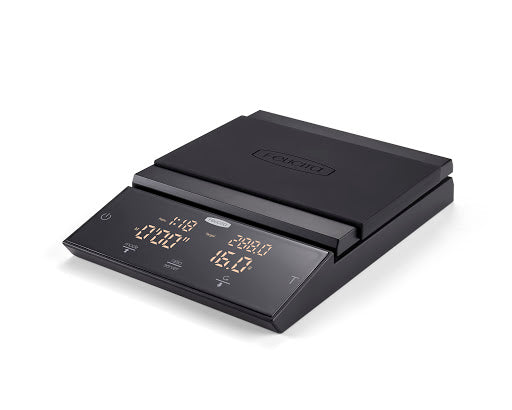
If a coffee tastes weak, watery, or "tea-like" (and not in a good way), it probably has a low concentration. This is likely due to the water-to-coffee ratio (for example, 1:19). The solution is simple: adjust the ratio of coffee to water. Do this either by using more coffee or by using less water. The downside is that you cannot fix this after you have brewed your coffee – you have to re-brew. All our brewing scales from Felicita have a function in the app that allows you to adjust the ratio and automatically calculate your recipe based on the desired concentration. On the top model, you can set the desired ratio directly on the scale's display.
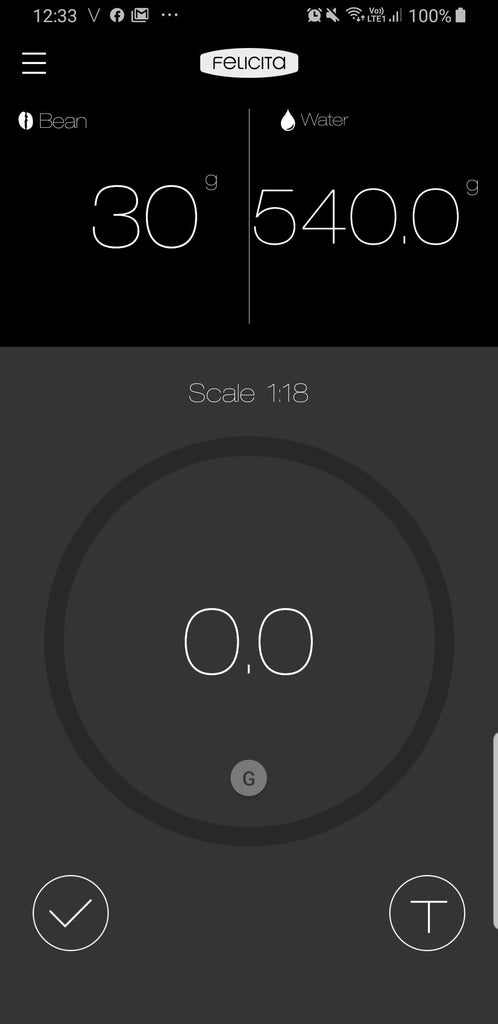
If coffee has a high concentration, it is likely due to a low ratio (perhaps 1:12) – exactly the opposite of the example above. This coffee will have intense, heavy, very strong flavors and a lack of flavor clarity. The solution is as simple as with low concentration – use less coffee or more water. The advantage with this problem is that you can typically salvage a high-concentration brew by adding water to the brewed coffee. This process is called "bypass" and can have a function in batch brewing. However, such a solution will never be as good as an optimal extraction with the correct ratio.
Extraction
Extracting coffee in filter brewing is complicated; we'll try to simplify it here. You can read much more in other posts here or on the Internet...
An underextracted coffee likely lacks many of the good, easily soluble substances found in coffee beans. The water hasn't managed to dissolve enough delicious flavor compounds, resulting in tastes that are sour, salty, and overly sharp/acidic. This is usually a result of an overly coarse grind, meaning a finer grind will improve the next brew.
Over-extracted coffee has the opposite problem: too much was extracted from the coffee beans, resulting in bitter, dry, ashy flavors. This is often because your grind is too fine, meaning that grinding the next brew a little coarser will help.
So, it's not about extracting as much as possible, but about finding an optimal extraction.
These are good theories, but the best way to turn them into something more than theories is to taste each of the four examples above.
Here's a simple test you can do at home:
You will brew five batches. Hand brewing (e.g., V60) works well, but the principles are the same for all brewing methods. And the numbers here account for different brewing methods. You can use any grinder, just use very coarse and very fine grind instead of the numbers below:
Brew 1: Low concentration – brewing ratio 1:25
This could be 12g of coffee and 300 ml of water using grinder setting 18 on a Virtuoso.
Brew 2: High concentration - brewing ratio 1:10
In accordance with the recipe above, this would be 30g of coffee and 300 ml of water with the same grinder setting.
Brew 3: Low extraction – Coarse grind
This cup has a standard 1:17 ratio, but you grind the coffee at setting 30 on the Virtuoso.
Brew 4: High extraction – Fine grind
Still 1:17, but you grind the coffee at setting 5 on the Virtuoso.
Brew 5: Just right
With a 1:17 ratio and a normal setting of 18 on the Virtuoso, this coffee should be just right. You can also use your favorite recipe.
Taste brews 1-4 and note the flavors mentioned. Please note that this is a rough experiment, but it is very useful when learning to identify the flavors you want and can avoid. Finish the test with brew 5 to reward yourself for actually completing the test!
Now you have a wiser coffee mind with the memory of how these common brewing problems taste, so you can identify them even in less extreme cases. By using this mental toolkit, you no longer have to wonder what went wrong with your brew in the future - you know what to change.
Do you have any questions? Just ask us!
By Alexander Choppin, adapted for Norwegian by Rune Åldstedt


Relevante Artikler
-
Part 6: Washed Coffee – The Art of Creating a Clean and Clear Taste
Have you ever had a coffee that tastes extra clean and clear? A coffee that transports you to the place where it was ...
-
Cafecore: A new trend for all the senses
Create your own coffee corner with the "CafeCore" trend! Do you love the warm and inviting atmosphere of your favorit...
-

Cold brew vs. iced coffee: What's the difference, and which is best for you?
When summer arrives and temperatures rise, many of us swap our warm cup of coffee for a refreshing cold version. But ...


