



Grind size and extraction: The basics

From the article 5 factors for a better brew, we learned that grind size is a crucial factor in coffee brewing. It allows for much more or less extraction, and can mean the difference between a good cup of coffee and an absolutely terrible one.
A Quick Refresher on Extraction Theory
Extraction is the process by which water pulls soluble materials out of coffee particles. When too much material is pulled from the coffee, it is referred to as "over-extraction." Similarly, pulling too little material out of coffee is referred to as "under-extraction."
Remember that a finer grind provides a larger surface area, which makes it faster and easier for water to pull soluble materials from the coffee. It also slows down the water flow through the coffee in the filter, which in turn results in longer contact time.
This is why espresso requires a fine grind – it slows down the water flow that is pressed through the coffee and exposes a lot of surface area for quick extractions.
This is also why we grind coarsely for French press – the coffee sits in the water for a long time (you don't have to worry about the coffee flowing quickly through the coffee bed), so we rely on a small surface area to avoid over-extracting the coffee.
Start with a grind setting that is approximately correct. We use this diagram as a rough recommended setting for Virtuoso, Virtuoso+, and Encore:

If you don't have one of these grinders, don't worry; Baratza has recommended settings for all its models online.
Signs that the coffee is under-extracted
Sour and salty flavors dominate. This is not just the acidity you find in coffee; it's an unpleasant, almost metallic taste. The coffee can also taste quite weak. This is due to the short contact time (the water flows through quickly) and/or the low surface area. The water passed too quickly by the coffee, only picking up a little of the soluble material in the coffee along the way.
If the flavors are very distinct – and almost too strong – you will want to grind a little finer. We recommend small adjustments, especially if you are still unfamiliar with setting the grinder. It's easy to overcompensate. Ten steps are probably far too many if your coffee is only slightly sour.
If the brew tastes decent but feels a bit sour or weak, you might consider either a small adjustment (if your machine has micro-adjustments) or a small reduction in the amount of coffee. If you use less coffee, the water will extract a little more from each coffee particle. Use small adjustments here too (e.g., 1 gram), as you don't want to risk the brew flowing too fast by removing too much coffee.
Signs that the coffee is over-extracted
Bitter, dry, ashy, astringent, or strong/intense flavors indicate over-extraction. These flavors occur when water extracts too much material from coffee – either because too much surface area was exposed to water, or because water was in contact with coffee for too long (or both). This is usually not very good, and a clear sign that you need to increase the particle size by grinding coarser.
Similar to down-dosing an under-extracted brew, you can up-dose when you over-extract. In both cases, this should only be for very small changes, as your dose has a greater effect on concentration than on extraction.
Signs that you have found the right grind size
There is no "correct" extraction. Rather, we want a balance of over- and under-extraction flavors in the coffee (something we often refer to as complexity in flavor). Combine these opposites, and you get something greater than the sum of its parts: fantastic coffee. Clear flavors, a delightful aftertaste, a pleasant mouthfeel – these are all signs that your extraction is in the right range. The biggest sign of success, however, is when you yourself think it tastes good!
Dive deeper
This has been a fairly basic introduction to the process of adjusting your brew. If there is one universal truth in the world of coffee, it is that things can always become more complex. Years of research have been invested, and although we haven't found or will find one perfect brew, this research has given us better tools and methods along the way. There are great resources online for deep dives into extraction, one of our favorites is Baristahustle.com. The coffee compass for brewing, in particular, is an excellent resource for orienting yourself when there is no obvious next step to adjust your brew.
Beyond that, stay tuned to this blog as we explore different brewing methods, tips and tricks for your brew, and some of our favorite brewing recipes!
By Alexander Choppin, adapted for Norwegian by Rune Åldstedt


Relevante Artikler
-
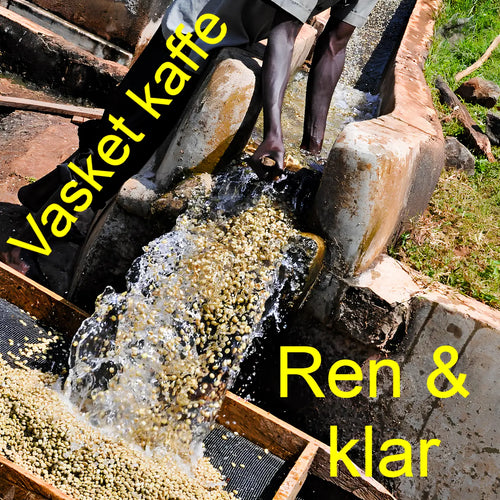
Part 6: Washed Coffee – The Art of Creating a Clean and Clear Taste
Have you ever had a coffee that tastes extra clean and clear? A coffee that transports you to the place where it was ...
-

The most delicious cold coffee recipes
Six Refreshing Summer Coffee Recipes When the sun is blazing and the days are getting longer, few things beat ...
-

Anaerobic berry-dried Starmaya – what does it actually mean?
One of the things that makes coffee such an exciting field is that there's always something new to taste and new to l...


