



Light roast or dark roast coffee?
Dark roasted coffee is popular. Light roasted coffee is also popular. We offer grinders that can handle both roast levels - and everything in between. However, it's important to be aware of the differences between them. Even with a consistent Baratza grinder, you'll need to make adjustments based on the roast level you're grinding. Here, you'll learn a bit more about this.
Dark and light coffees are quite different from each other in terms of their physical and chemical properties. Your grinder behaves differently - and must be used in a different way - depending on the roast level you're grinding!
Also, remember that generally here in Norway, we roast our coffee lighter than in many other countries. And there's no universal standard for what constitutes a light and what constitutes a dark roast. So, what some consider dark roasted, others might consider light roasted. It's also true that a coffee's inherent flavors can be roasted away if it's roasted dark enough. Therefore, many mistakenly assume that the lighter a coffee is, the higher its quality, and vice versa. This is incorrect. Here's an example of dark roasted coffee from Kaffa, which many would consider light roasted: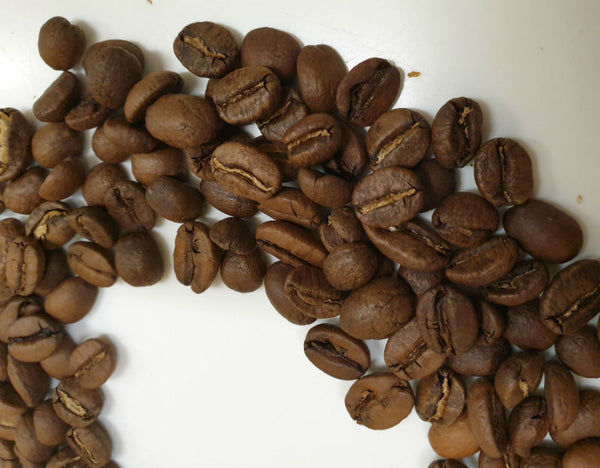
There are three main ways that roast level will affect the use and performance of a grinder: the grind settings you use, how you need to clean and maintain it, and what can go wrong. Let's consider some tips and tricks for each.
Grind Size
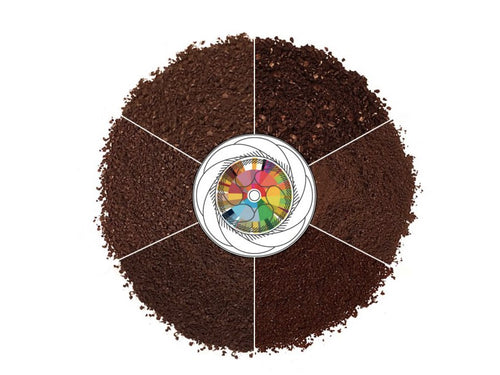
Lighter coffee will usually need a finer grind for optimal results. From earlier on this blog, we learned that a finer grind increases surface area, which aids extraction. Dark and light coffees have different solubilities, and water will therefore extract substances differently.
Dark roasted coffee has a lower density and lower moisture content because it has been exposed to more heat during the roasting process. This means you will generally need a slightly coarser grind to achieve the same extraction when brewing it.
Light roasted coffee has a higher density and slightly higher moisture content than dark roasted, which will affect solubility in the other direction and make extraction slightly more difficult. A finer grind compensates for this.
The extra density also means that the grinder takes longer to process/grind light roasted coffee. You can expect noticeable differences if you switch from one to the other, and even more so when grinding for espresso.
The roast level will also affect how ground coffee behaves after grinding. Dark roasts tend to be more static, which can make the job of getting the ground coffee out of the grinder and into the coffee filter a bit messy. Light roasts, on the other hand, tend to leave behind a thin, dry, papery material we call chaff, which is part of the coffee bean itself, and which is often burned away in darker roasts. This material is incredibly light and often static.
All grinders we sell are factory calibrated to satisfy as many users and uses as possible, but with use over time, you may find that your lighter coffee is no longer fine enough for espresso on the grinder. In such cases, it is useful to consider whether to recalibrate the grinder. This is possible on all our Baratza grinders, and you can find instructions on their troubleshooting pages.
MAINTENANCE AND CLEANING
All grinders require regular cleaning. Coffee leaves oils when you grind it, but dark roasted coffee has a greater potential to leave oils in the grinder. If you grind dark roasted coffee, it's wise to clean a bit more often than if you grind light coffee. The oil can mix with coffee dust in the grinder and solidify into a rubber-like mass that can change the coffee's flow through the grinder and alter the grinder's characteristics, and in the worst case, cause it to clog completely.
More frequent cleaning is always better, but a reasonable compromise is to thoroughly scrub the burrs and chamber using the brush that came with your grinder four times a year if you grind light roasted coffee for filter brewing, and at least twice as often if you grind espresso. Consider cleaning weekly if you use particularly dark and intense roasts like French or Italian roasted espresso.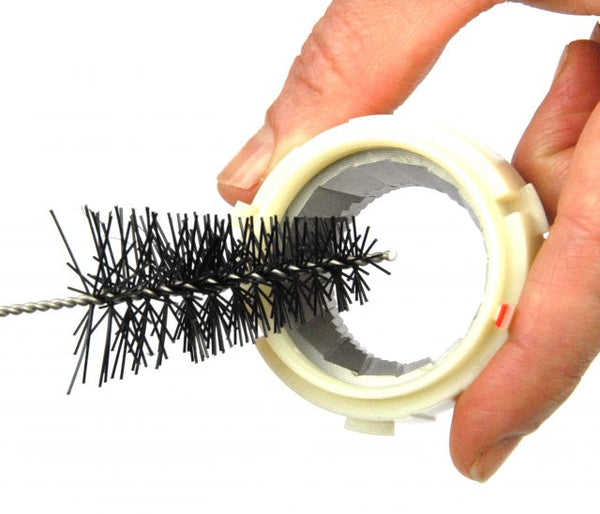
Many people find it easier to buy grinder cleaning pellets, which are ground much like coffee. They are often made from grain products and will scrub oil from the grinder's nooks and crannies, leaving a clean surface (albeit covered in grain dust). Just remember to follow the instructions that come with your chosen grinder cleaner!
The oils from the coffee will also adhere to the bean hopper and the ground coffee container. Baratza makes these parts from antistatic plastic, but the antistatic properties are reduced by layers of coffee oil. It's a good idea to wash these parts in warm soapy water - especially if you grind dark roasted coffee. You'll easily see and feel when it's time to wash these parts.
And while we're on the subject of static electricity - darker roasted coffee tends to be more brittle and fragile, which means an extra amount of small particles and a higher tendency for static electricity during grinding.
However, the more brittle and fragile coffee is easier to grind and thus causes less wear on the burrs in your grinder. The steel burrs in a Baratza grinder are meant to last for about 500kg before they need to be replaced. (Approximately 2000 250g bags of coffee, that is!) If you exclusively grind very light roasted coffee, it might be wise to replace them a bit more often. If you grind light roasted coffee from quality Norwegian roasteries, you might consider replacing them after just 200-300 kg.
WHAT CAN GO WRONG
Like all machines, a Baratza grinder can experience malfunctions. Regardless of the coffee you're grinding, it can clog or grind very slowly, but there are a few differences in why and how this happens.
It's self-evident that your coffee grinder should only be used to grind roasted coffee. We do not recommend grinding spices, green coffee, nuts, or other materials that are not roasted coffee, as this will damage the grinder.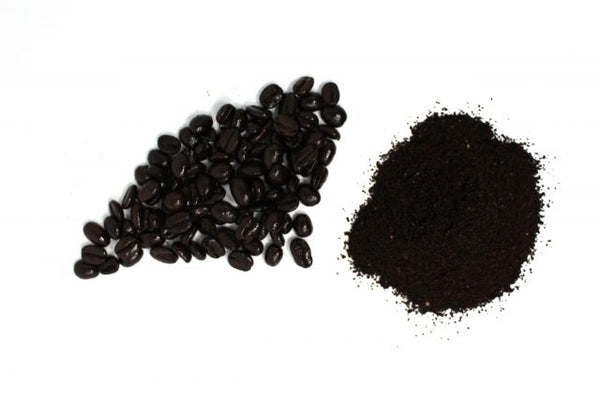
A clogged grinder is most often caused by ground coffee building up in the grinder housing, with the clog often located in the chute leading out of the grinding chamber. This will also happen if too much coffee is ground at once. The lower density of dark roasted coffee means it fills up the ground coffee drawer faster, and can actually lead to a clogged grinder if you let it fill completely.
Although light roasted coffee is not as prone to these problems, it doesn't mean you can't enjoy dark roasted coffee - just stick to the cleaning advice above.
Foreign objects such as stones, concrete, or even screws can sneak into coffee on its journey from the coffee bush to your kitchen. Our grinders have a built-in fail-safe in case a foreign object enters the grinder, preventing serious damage. That said, any repair - even a simple one - is one too many.
No particular roasting profile can prevent foreign objects from ending up in your coffee; it just happens from time to time and is part of the coffee experience. However, it's worth noting that darker roasted and cheaper coffees are often chosen from coffee farms with a greater focus on volume, which means that sorting and quality control are not always as thorough. This means a slightly higher chance of foreign objects in a bag of dark roasted coffee.
Quality-focused roasters, however, will sort out foreign objects as best they can, and companies that don't have the same focus on quality will sort less, regardless of roast level. In summary, we can say that the best approach is to choose high-quality coffee also to avoid problems with your grinder, and you'll get better coffee as a bonus, whether it's dark or light roasted.
We would say that the first and biggest step towards good coffee at home is the coffee itself. The second step is your grinder. A well-roasted coffee - dark or light or somewhere in between - is crucial for your coffee enjoyment, and the grinder is the best tool to realize the potential of the roast. Like any tool, it must be used correctly to achieve the best possible result. And our grinders can do the job for both light and dark roasted coffee.
By Alexander Choppin, adapted for Norwegian by Rune Åldstedt


Relevante Artikler
-
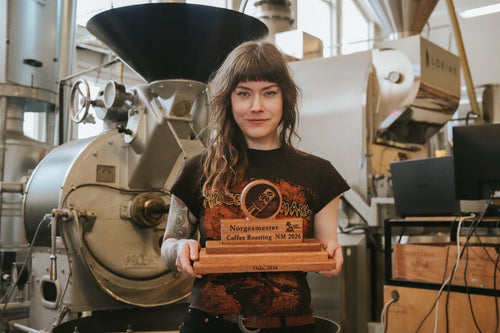
Kaffa is a double champion: Winner of the Norwegian Coffee Roasting Championship and Nordics Best Roaster!
At Kaffa, we have always had one clear vision: to find, roast, and serve specialty coffee of the highest quality. Now...
-
The secret to perfect coffee: Let the beans rest, but not for too long
Have you ever wondered why coffee sometimes tastes heavenly and other times just… okay? The answer might lie in somet...
-
Grind size and extraction: The basics
From the article 5 factors for a better brew, we learned that grind size is a crucial factor in coffee brewing. It a...


