




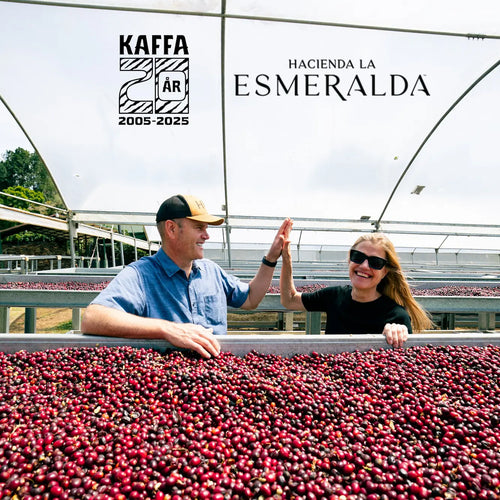
The Hunt for the World's Most Famous Coffee: A Travelogue from Hacienda La Esmeralda (2007)
Panama Geisha. For most in the specialty coffee world, this name is synonymous with exceptional quality and a flavor profile that changed everything. Hacienda La Esmeralda put this variety on the map and won 'Best of Panama' time and time again, achieving then incredible auction prices.
Long before it became a global phenomenon, Kaffa was there. In February 2007, Robert Thoresen traveled to the Chiriquí highlands to meet the producers, including Daniel Peterson, and experience this legendary coffee at its source. This is the travelogue from that visit – a small piece of coffee history, retrieved directly from our archives:
PANAMA
By 'airport bus', and by that is meant the contraption that looks like a flying bus with propellers, one arrives in David, the capital of the Chiriquí highlands. Panama's best coffee comes from here. We have visited the most famous districts; Volcán, Renacimiento and Bouquete.
Weather and Wind
The Cordillera Central stretches from Costa Rica in the east and across large parts of Panama. The mountain range forms a significant climatic divide between the Atlantic coast in the north - with an influx of cold wind and rain, and the southern side facing the Pacific with drier and warmer conditions.
When cold air currents and moisture roll over the mountain ridge, climatic differences are created that affect the growth of the coffee bushes and the ripening process of the coffee cherries. Within a radius of a few kilometers, there are coffee plots that receive from 1.5 to 5 meters of rain per year! One area experiences drought for 9 months, another for 3. And an altitude difference of several hundred meters within one and the same plot means that harvesting is carried out continuously from December to April.
The consequence for us as coffee tasters and green coffee buyers is that we have to test coffee from many areas - and several lots from each plot. But the reward is finding the most delicious, sweetest, and purest qualities this country has to offer.
Bouquete
Those who started coffee cultivation in Panama about 100 years ago were immigrants from Europe, among them Ricardo Koyner McIntyre's grandfather. Ricardo now runs Kotowa Coffee, with several plots - fincas - on the slopes around the bowl-shaped valley of Bouquete. His best coffee consists of special sections of the Caturra and Catuai varieties and has several good merits in the Best of Panama competition. Like other farmers in the area, he will be able to harvest from his new Geisha bushes within 2-3 years.
Wednesday, February 14, 2007: Finca Jaramillo
Daniel Peterson is a 3rd generation Swedish-American in Bouquete, and his family harvests from two beautiful coffee plots in the valley: Finca Jaramillo and Canas Verdes. The coffee cherries from these plots are processed at their own facility centrally located in the valley. The coffee is marketed as Hacienda Esmeralda. Most farms in the area have their own mills for processing the coffee cherries. The most common method among quality-oriented producers is aqua pulping, a mechanical washing process that requires less water and the beans are not fermented. This allows for better control (no risk of over-fermentation), clean coffee, and an environmentally friendly process.
Daniel discovered the Geisha bushes, a coffee species of direct African origin, on the Jaramillo plot five years ago. Initially by chance: only the Geisha plants survived a coffee blight that destroyed many bushes in the same area. The plot, covering about 60 acres, extends up to 1750 meters above sea level. When the cherries are picked ripe and the processing is precise, one can experience a rarely powerful aroma, sweetness balanced with good citrus acidity, and a super-elegant mouthfeel. A truly unique coffee taste!
That is why Hacienda Esmeralda Special Geisha from Jaramillo has won Best of Panama three years in a row.
We observed the picking of Geisha at Finca Jaramillo this Wednesday in February. It is picked only every other week throughout the season, as only the ripest cherries are harvested at any given time.
The bushes have slender branches, less foliage, and the cherries grow in clusters 5-10cm apart. The cherries are large and the bean itself is oblong in shape. Geisha yields about half as much per hectare as, for example, Caturra.
Thursday, February 15, 2007: Hacienda Esmeralda
The coffee cherries are picked in the morning and processed in the afternoon, the day before. Today the coffee was to be laid out to dry. Daniel prefers to let the best coffee from the Jaramillo plot dry on a cement patio - in the sun. They have heated drum dryers as an alternative should the weather require it.
We tasted coffee from the previous picking - two weeks earlier. Of course, it's not fully stabilized yet, but still with a delicious aroma and fantastic potential: Scent of rosehip, peach, and citrus peel. Super clean and delicate taste with sweet citrus character and good balance. As the only coffee roastery in Europe, KAFFA will receive some bags from this harvest. Sometime this summer, I guess. We look forward to it.
Drying on a cement patio takes 3-5 days with continuous turning and raking. Then the coffee must rest for about 10 weeks before export. Good things come to those who wait....
read more: haciendaesmeralda.com
sincerely, robert & co.


Relevante Artikler
-
From Europe's First Geisha to Cañas Verdes: The Story Behind Our Most Exclusive Coffee
In the early 2000s, Panama was a small and obscure coffee-producing country. Production was low and steadily declinin...
-
Gesha vs Geisha: The myth of the coffee's name
In the world of coffee, there is a myriad of different species and varieties, each with its unique flavor and history...
-

Flat vs. conical burrs in coffee grinders, which is best?
In this blog post, we will provide a brief overview and attempt to answer the question: What is best, flat burrs or c...


